
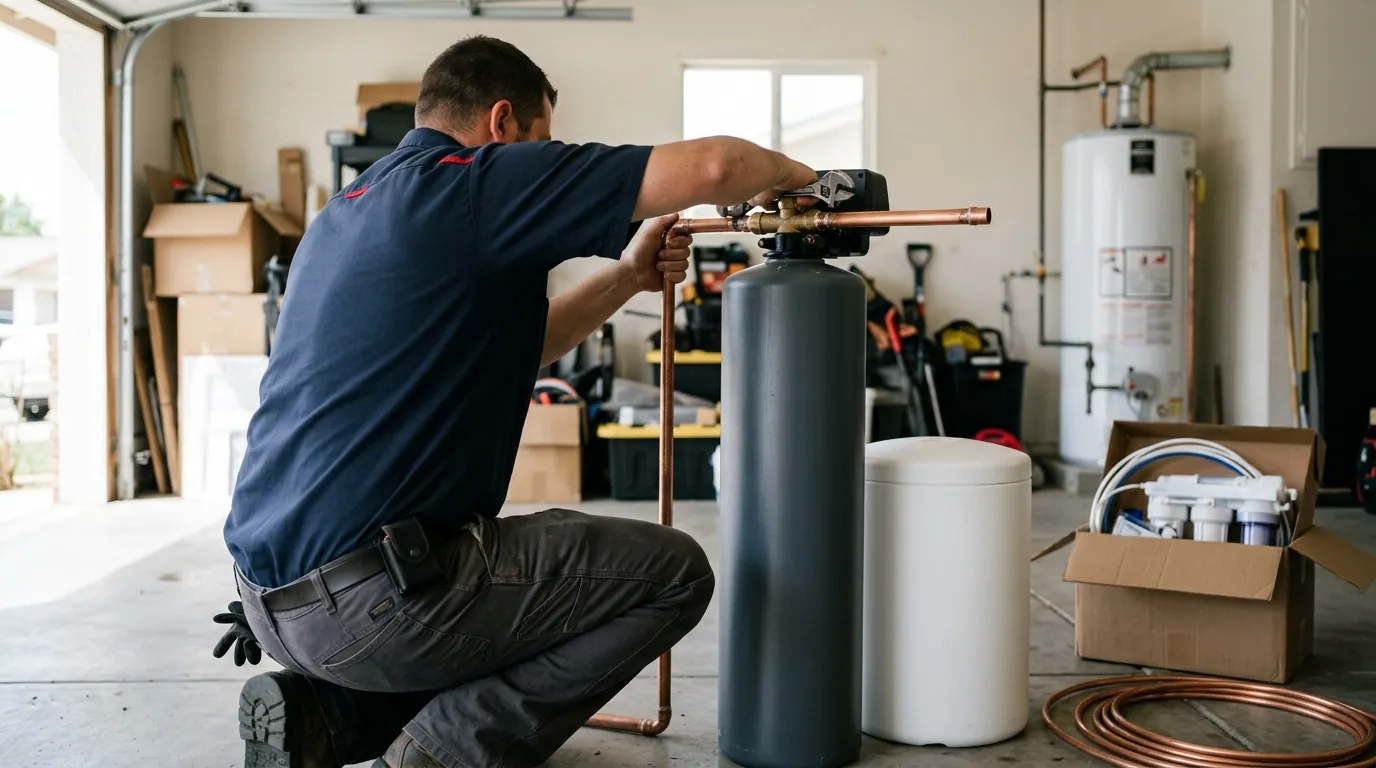
Water Softeners and Filtration Systems in Tehachapi
Trusted water softeners and filtration systems in Tehachapi, CA. Plumbing and HVAC pros, upfront pricing. Call (661) 863-9242.
Our technicians are dispatched from our Bakersfield, CA headquarters and are typically on-site in Tehachapi within 60 minutes of your call.
The water coming out of taps in the 93561 ZIP code tells a story that valley residents rarely deal with: Tehachapi sits at roughly 4,000 feet where groundwater percolates through calcium- and magnesium-rich geology before it ever reaches a faucet. The result is some of the hardest water in Kern County — scale that crusts inside water heaters, clogs showerheads, and shortens appliance life faster than most homeowners expect. Whether you’re on a municipal line near Downtown Tehachapi or drawing from a private well out in Bear Valley Springs, a properly sized water softener or whole-house filtration system makes a measurable difference in how your plumbing ages.
Why Tehachapi Properties See Accelerated Water Quality Issues
Hard water is a statewide problem, but the mountain geology around the Tehachapi Pass amplifies it. Groundwater here travels through limestone and granite formations before reaching storage, picking up dissolved minerals along the way. On a municipal supply, that hardness arrives at your meter already concentrated. On a private well — common in gated communities like Stallion Springs and Bear Valley Springs — the picture gets more complicated: iron, sediment, and occasionally hydrogen sulfide can layer on top of hardness, meaning a softener alone isn’t always the full answer.
The elevation adds another wrinkle. Tehachapi’s genuine winters — hard freezes, occasional snow, temperature swings that valley cities simply don’t see — stress water-using appliances more than the calendar suggests. A water heater fighting heavy scale buildup while also recovering from a cold-snap demand surge fails years ahead of schedule. Protecting the equipment starts with treating what flows into it.
Our Water Treatment Process in Tehachapi
Every installation starts with a water test, not a sales pitch. We pull a sample and measure hardness (grains per gallon), iron content, pH, and sediment load before recommending anything. That matters here because a Golden Hills home on city water and a Stallion Springs property on a private well can require completely different equipment even if they’re a few miles apart.
From there, the process typically runs:
- System sizing — softener capacity is matched to household size and measured hardness, not a one-size-fits-all unit pulled off a shelf.
- Pre-filtration if needed — wells with sediment or iron get a whole-house sediment filter or iron-reduction cartridge upstream of the softener so the resin bed isn’t fouled prematurely.
- Installation and bypass plumbing — we set a proper bypass valve so the system can be serviced without cutting water to the house.
- Reverse osmosis at the kitchen — many Tehachapi homeowners add an under-sink RO system for drinking and cooking water after softening, which removes residual sodium from the ion-exchange process.
- Startup and calibration — regeneration cycles are programmed to actual water usage, not factory defaults, which saves salt and water.
Equipment and Methods for Hard Mountain Water
For most Tehachapi households, a dual-tank or demand-initiated regeneration softener outperforms a basic timer-based unit because mountain households often have irregular usage patterns — think vacation cabins, part-time residents, or large lots with irrigation. Demand-initiated systems regenerate only when the resin is actually exhausted, which cuts salt consumption noticeably over a year.
Whole-house carbon filtration is a common add-on for properties near the Tehachapi Pass wind farm corridor, where some well owners report occasional taste and odor variation tied to seasonal water table shifts. A carbon block filter upstream of the softener addresses that without over-engineering the system.
For drinking water specifically, a reverse osmosis system installation under the kitchen sink is the most cost-effective path to bottled-water quality at the tap — and in a mountain community where hauling cases of water up from the valley is a real inconvenience, the payback is faster than most people expect.
Local Note
One pattern that comes up repeatedly on well-served properties in Bear Valley Springs and Stallion Springs: the long driveways and gated entries that define those communities can mean the water softener is installed in a garage or utility room that sees genuine winter temperatures. Standard brine tanks and resin vessels aren’t rated for repeated freeze-thaw cycles. When we install in an unheated space at Tehachapi’s elevation, we account for that — either recommending an insulated enclosure or confirming the install location stays above freezing before we finalize placement. It’s a detail that rarely comes up in a Bakersfield install but matters every winter up here.
Getting to Tehachapi from Bakersfield
All Pro Plumbing Heating and Air runs calls to Tehachapi around the clock. The drive up Highway 58 through the pass typically puts a technician in the area within the hour depending on conditions — winter weather on the grade can add time, and we’ll let you know if that’s a factor when you call. Outlying neighborhoods like Bear Valley Springs and Stallion Springs are part of our regular route; the drive doesn’t deter us, and we don’t tack on a surprise trip charge for the distance.
Reach us any time at (661) 863-9242 to schedule a water test or discuss options for your Tehachapi home or property.
Water Softeners and Filtration Systems in Tehachapi: Service Coverage
Frequently Asked Questions
How fast can you arrive for water softeners and filtration systems in Tehachapi?
How hard is the water in Tehachapi compared to the rest of Kern County?
Do Bear Valley Springs and Stallion Springs well owners need a different setup than Tehachapi city-water homes?
Can a water softener be installed in an unheated garage in Tehachapi's climate?
What does a whole-house water filtration installation involve, and how long does it take?
Does adding a water softener affect a reverse osmosis drinking water system I already have?
Will my homeowners insurance cover water softeners and filtration systems in Tehachapi?
Water Softeners and Filtration Systems response in Tehachapi
Most Tehachapi calls see a technician on-site within 60 minutes from our Bakersfield headquarters.