Sewer Line Repair and Replacement in Bakersfield
Trusted sewer line repair and replacement in Bakersfield and surrounding areas. Plumbing and HVAC pros, upfront pricing, free estimates. Call (661) 863-9242.
What’s actually happening beneath your yard
When drains throughout the house start backing up at the same time — the toilet gurgles when you run the kitchen sink, the shower fills with gray water before it drains — the problem isn’t a single clogged fixture. It’s the main sewer line, the single pipe that carries every drop of wastewater from your home to the city sewer or septic system. A slow failure can smolder for months before it announces itself with a sewage smell rising from floor drains or a soggy patch of lawn that never quite dries. When it does announce itself, it usually does so all at once. All Pro Plumbing Heating and Air handles sewer line repair and replacement in Bakersfield around the clock, because a sewer backup doesn’t wait for business hours.
What sewer line repair and replacement actually involves
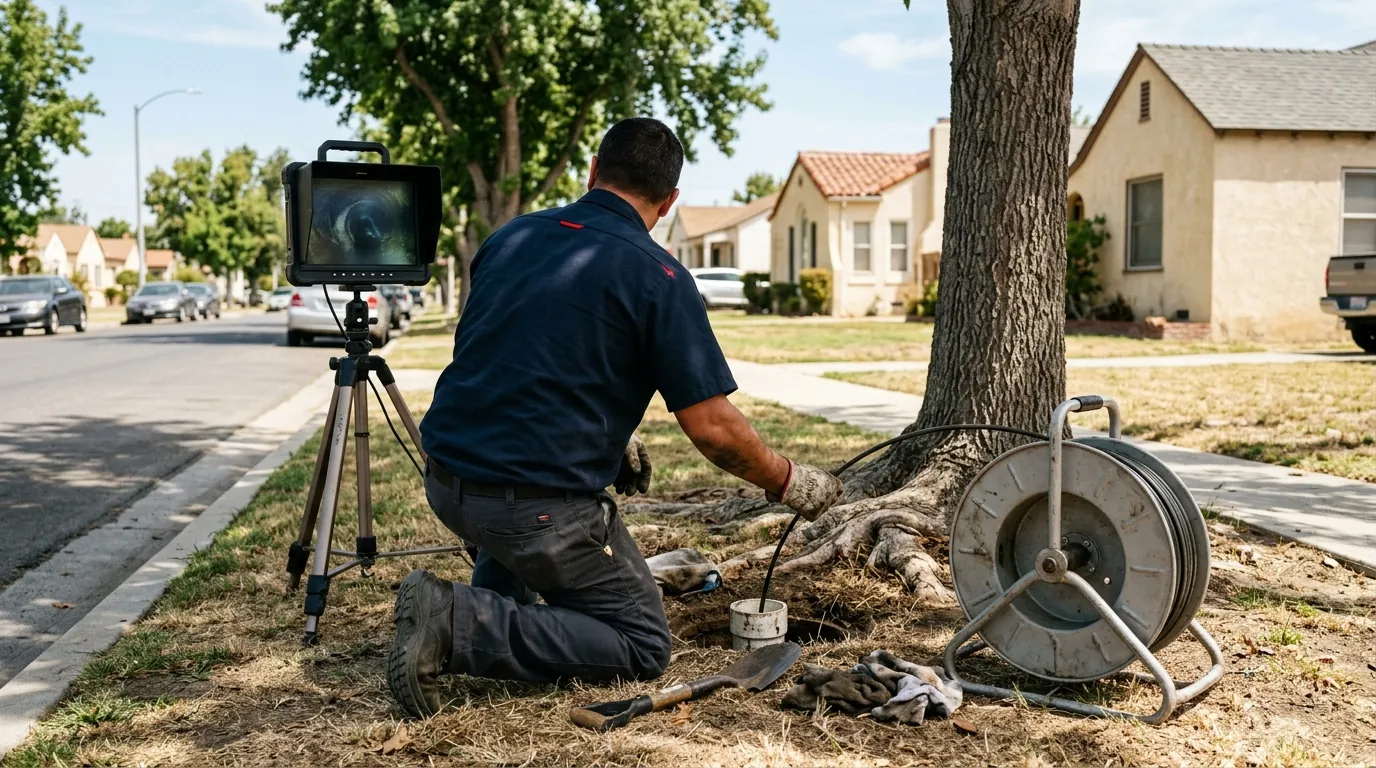
Sewer work starts underground and invisible, which is why diagnosis has to come before any digging. A sewer camera inspection threads a waterproof camera through the cleanout and down the pipe, transmitting live video of what’s actually wrong: a root mass that’s been threading through a joint for years, a section of pipe that’s settled and bellied so wastewater pools and solids accumulate, a collapsed sewer line where the pipe wall has caved inward, or decades of grease and scale buildup that’s narrowed the pipe to a trickle. The camera locator pinpoints the depth and GPS coordinates of any defect so the crew knows exactly where to work.
Depending on what the camera finds, repair takes one of two paths. Trenchless sewer repair — either pipe lining (CIPP, cured-in-place pipe) or pipe bursting — rehabilitates or replaces the pipe with minimal surface disruption. Pipe lining pulls a resin-saturated liner through the existing pipe and inflates it against the pipe wall; once cured, it forms a seamless new pipe inside the old one. Pipe bursting fractures the old pipe outward while simultaneously pulling a new HDPE pipe into place. Both methods preserve landscaping, driveways, and concrete flatwork that open-cut excavation would destroy. When the pipe has fully collapsed, shifted severely, or the access geometry doesn’t allow trenchless methods, traditional open-cut excavation removes and replaces the damaged section. Either way, the repair is pressure-tested and re-inspected by camera before the job closes.
Timeline varies: a trenchless liner on a straightforward residential run can be completed in a single day. A full sewer line replacement with excavation through a Bakersfield yard typically runs one to two days for the pipe work, with backfill compaction and surface restoration following.
Our process
-
Sewer camera inspection and locating. Before any repair decision is made, a camera goes in. We document the footage — root intrusion, offset joints, pipe sag, cracks, or collapse — and mark the defect location on the surface with a locator wand. You see exactly what we see.
-
Repair method recommendation and scope agreement. Based on pipe material, depth, defect type, and site conditions, we recommend trenchless lining, pipe bursting, or open-cut replacement and walk you through why. You get a written scope and price before any ground is broken.
-
Line isolation and bypass if needed. For jobs requiring the sewer to be offline for more than a few hours, we set up a temporary bypass so the home isn’t completely without drain service during the repair.
-
Repair or replacement execution. Trenchless jobs pull the liner or burst the pipe in a single continuous operation. Excavation jobs expose only the damaged section, cut out the failed pipe, and install new pipe with proper slope and bedding material — slope matters enormously; Bakersfield’s flat terrain means a pipe laid even slightly off-grade will belly and fail again.
-
Post-repair camera inspection and pressure test. The camera goes back in after the repair. We verify the liner has cured without wrinkles or voids, confirm the new pipe is clear, and document the finished condition. The cleanout cap goes back on and the yard gets restored.
What separates a good sewer repair from a bad one
The most common mistake in sewer work is skipping the camera and guessing at the cause. A hydro-jet can blast roots clear and restore flow for six months — then the roots come back, because the pipe joint that let them in was never addressed. A liner installed over a severely offset joint or a section of pipe with negative slope will fail prematurely. Good sewer work diagnoses first, then repairs the actual defect.
Pipe slope is the detail that gets missed most often on replacement jobs. The standard is ¼ inch of fall per foot of run. In Bakersfield’s slab-on-grade construction, where the sewer exits the foundation at a fixed elevation and the yard is nearly flat, hitting that slope across a long run requires careful grade work during backfill — not just dropping new pipe in the trench at whatever angle is convenient.
On trenchless liner jobs, the liner cure time and temperature matter. An under-cured liner is soft and can deform under soil load. A reputable crew monitors cure time against the resin manufacturer’s specifications, not against the schedule.
Seasonal and regional considerations
Bakersfield’s clay-heavy soils expand when the rare heavy rain saturates them and shrink during the long dry summers. That repeated movement stresses pipe joints — particularly on older clay tile and Orangeburg pipe still found in pre-1970s neighborhoods near downtown and the older east-side tracts. Tree roots follow moisture, and in a climate where irrigation is constant, ornamental trees planted near sewer laterals are a persistent source of root intrusion. If your home is on a slab and was built before 1980, the sewer lateral running beneath that slab may be cast iron that has corroded from the inside out — a problem a camera finds quickly and that trenchless lining can often fix without breaking the floor.
Service area
All Pro Plumbing Heating and Air runs sewer camera inspections, trenchless sewer repair, and full sewer line replacement throughout Bakersfield and the surrounding communities, including Oildale, Rosedale, Shafter, Wasco, Delano, Tehachapi, and the unincorporated areas of Kern County. The city-specific pages for each of those areas link back here for the full technical detail on how this work gets done.
If multiple drains are slow, sewage odor is coming up from a floor drain, or you’ve already had a backup, call (661) 863-9242 to schedule a sewer camera inspection — the footage tells you exactly what you’re dealing with before any repair decision is made.
Frequently Asked Questions
What does a sewer camera inspection actually show, and do I get to see the footage?
How do I know whether trenchless sewer repair or open-cut replacement is right for my situation?
Will a trenchless liner fix a pipe that has negative slope or a belly?
My sewer backed up into the house — what should I do before the crew arrives?
How long does a cured-in-place pipe liner last, and does it affect the pipe's diameter?
Looking for the best sewer line repair and replacement company in Bakersfield?
All Pro Plumbing Heating and Air provides sewer line repair and replacement in Bakersfield, CA and the surrounding area. We answer calls 24/7 — call (661) 863-9242 for immediate help.
Need Sewer Line Repair and Replacement now?
We respond 24/7 across Bakersfield and surrounding CA cities.
Related Coverage
- Our Plumbing, Heating and Air Services
- Contact All Pro Plumbing Heating and Air
- Sewer Line Repair and Replacement in Bakersfield
- Sewer Line Repair and Replacement in Delano
- Sewer Line Repair and Replacement in Oildale
- Sewer Line Repair and Replacement in Rosedale
- Sewer Line Repair and Replacement in Shafter
- Sewer Line Repair and Replacement in Taft
- Sewer Line Repair and Replacement in Tehachapi
- Hydro Jetting vs Snaking: Which Drain Cleaning Method Do You Need?
- Trenchless Sewer Repair, Explained: Pipe Lining vs Pipe Bursting