
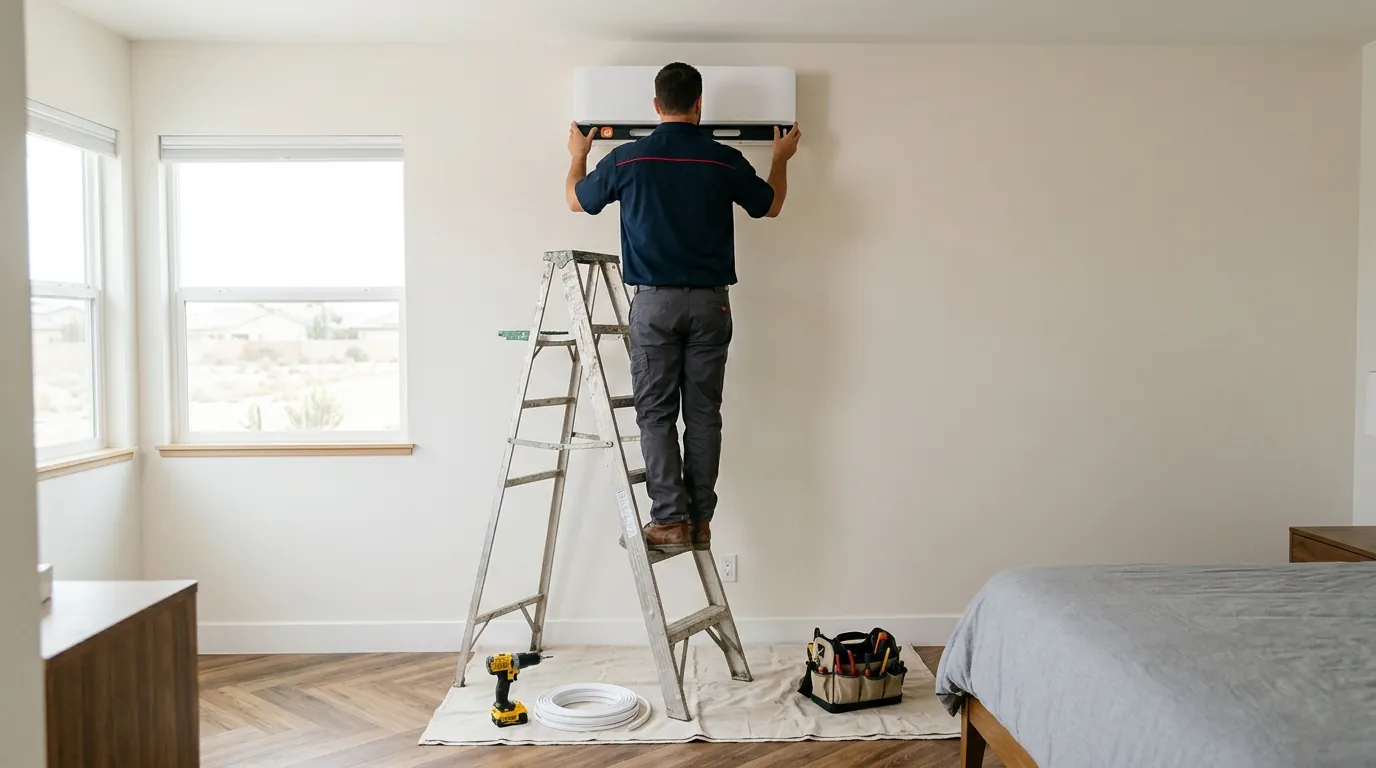
Ductless Mini-Split Systems in Bakersfield
Trusted ductless mini-split systems in Bakersfield and surrounding areas. Plumbing and HVAC pros, upfront pricing, free estimates. Call (661) 863-9242.
What ductless mini-split systems actually involve
You have a room that never cooperates — a converted garage baking at 95°F in July, a master bedroom addition that the central system can’t quite reach, a home office above the garage where the duct run would cost more than the equipment itself. A ductless mini-split solves all of that without tearing into walls or extending an overtaxed duct system. One refrigerant line set, one indoor air handler, one outdoor compressor — and that space becomes comfortable year-round. Multi-zone configurations let you condition two, three, or four separate rooms from a single outdoor unit, each with its own thermostat and schedule.
The equipment itself is a heat pump, meaning it moves heat rather than generating it. In Bakersfield’s 105°F summers it extracts heat from inside and dumps it outdoors. On the handful of winter nights that dip into the 30s, it reverses — pulling heat from the outdoor air and delivering it inside. Modern inverter-driven compressors modulate their output continuously rather than cycling on and off, which is why mini-splits are dramatically quieter and more efficient than the window units or baseboard heaters they typically replace. SEER2 ratings on current residential models commonly land between 18 and 25, well above the federal minimums for central systems.
A single-zone installation — load calculation, line set routing, wall penetration, mounting the indoor head, setting the outdoor condenser, vacuum, charge verification, and startup — typically runs four to six hours for a straightforward application. Multi-zone work adds time proportionally, and any job requiring a longer line set run, attic routing, or a flush-mount ceiling cassette instead of a standard wall-mount head will take longer.
Our process
-
Load calculation and equipment selection. Before anything is ordered, we calculate the heat gain and loss for the space — square footage, ceiling height, insulation quality, window orientation, and sun exposure all factor in. Bakersfield’s climate zone means cooling load almost always drives the sizing decision. An undersized unit short-cycles and never dehumidifies properly; an oversized unit short-cycles for a different reason and leaves the room clammy. We match the BTU capacity to the room, not to a round number on a price sheet.
-
Line set routing and wall penetration. The refrigerant line set — supply, return, condensate drain, and control wiring bundled together — has to travel from the indoor head to the outdoor condenser. We plan the route to keep the run as short and clean as possible, minimize bends that add pressure drop, and protect exposed exterior sections with line hide conduit. The wall core is sealed against pests and moisture after the lines pass through.
-
Equipment mounting and electrical. The indoor air handler mounts on a dedicated bracket secured to studs or blocking — not drywall anchors. The outdoor condenser sits on a pre-leveled pad with adequate clearance on all service sides. Each system requires a dedicated circuit; we pull the permit and coordinate the electrical rough-in so the inspection happens before the wall is closed.
-
Vacuum, leak check, and refrigerant verification. After the line set is connected, we pull a deep vacuum — typically below 300 microns — and hold it to confirm there are no leaks before the factory charge is released into the system. Skipping this step is the single most common shortcut on DIY or low-bid installs, and it’s the reason systems fail within the first two seasons.
-
Commissioning and homeowner walkthrough. We run the system through heating and cooling modes, verify airflow at the head, confirm the condensate drain is flowing freely, and check the outdoor unit’s operating pressures. Then we walk you through the remote and any app-based controls — schedules, sleep modes, and the filter-cleaning reminder so the system stays efficient between service visits.
What separates a good mini-split installation from a bad one
The line set vacuum is the clearest dividing line. Moisture and non-condensables left in the refrigerant circuit degrade the compressor oil and cause premature failure — a problem that shows up two or three years after install, long after a low-bid contractor is gone. A proper vacuum pull with a micron gauge takes 30–45 minutes and is non-negotiable.
Oversizing is the second most common mistake. A 24,000 BTU unit in a 300-square-foot room will cool it in minutes, then shut off, leaving humidity high and the compressor cycling hard. Accurate Manual J-style load calculations prevent this.
Line set length matters more than most homeowners realize. Manufacturers specify maximum and minimum line lengths, and some require additional refrigerant per foot beyond a baseline. Ignoring this — or guessing — voids the equipment warranty and degrades performance.
Finally, permits. Bakersfield requires a mechanical permit for mini-split installations, and the electrical circuit requires its own permit. Unpermitted HVAC work can complicate a home sale and may void a homeowner’s insurance claim if the system causes a fire or flood.
Seasonal and regional considerations
Bakersfield’s San Joaquin Valley location creates a demanding cooling season that runs from May through October, with afternoon highs regularly exceeding 100°F. Outdoor condensers in this climate work harder than units in coastal markets — clearance around the unit, shade from direct afternoon sun where possible, and keeping the coil clean of dust and cottonwood debris are all meaningful. The region’s hard water also affects condensate drain lines; mineral buildup in the drain pan and line is worth checking annually. On the heating side, Valley winters are mild enough that a heat pump handles the load comfortably without a backup strip heater, which keeps operating costs low.
Service area
All Pro Plumbing Heating and Air installs and services ductless mini-split systems throughout Bakersfield and the surrounding communities — including Oildale, Rosedale, Shafter, Wasco, Delano, Tehachapi, and the broader Kern County area. City-specific pages link back here for full technical detail.
If a room in your home has never been comfortable — or if you’re finishing a garage, adding an ADU, or replacing a window unit that’s finally given out — call (661) 863-9242. We’ll size the system correctly, pull the permits, and install it the way the manufacturer requires.
Frequently Asked Questions
How do I know whether I need a single-zone or multi-zone mini-split system?
Can a mini-split heat pump handle Bakersfield winters, or do I need a backup heat source?
What's involved in the permit process for a mini-split installation in Bakersfield?
Why does the line set vacuum matter, and how can I tell if it was done correctly?
How often does a ductless mini-split need maintenance, and what does it include?
Looking for the best ductless mini-split systems company in Bakersfield?
All Pro Plumbing Heating and Air provides ductless mini-split systems in Bakersfield, CA and the surrounding area. We answer calls 24/7 — call (661) 863-9242 for immediate help.
Need Ductless Mini-Split Systems now?
We respond 24/7 across Bakersfield and surrounding CA cities.
Related Coverage
- Our Plumbing, Heating and Air Services
- Contact All Pro Plumbing Heating and Air
- Ductless Mini-Split Systems in Bakersfield
- Ductless Mini-Split Systems in Delano
- Ductless Mini-Split Systems in Oildale
- Ductless Mini-Split Systems in Rosedale
- Ductless Mini-Split Systems in Shafter
- Ductless Mini-Split Systems in Taft
- Ductless Mini-Split Systems in Tehachapi