
Slab Leak Repair in Bakersfield
Trusted slab leak repair in Bakersfield and surrounding areas. Plumbing and HVAC pros, upfront pricing, free estimates. Call (661) 863-9242.
The leak you can’t see is the one that does the most damage
You notice a warm patch on your tile floor near the hallway, or your water bill climbs $80 for no obvious reason, or you hear a faint hiss somewhere beneath your feet. In Bakersfield’s slab-on-grade construction — the dominant foundation style across most of the city — your supply and drain lines run directly through or under a concrete slab. When one of those pipes fails, water migrates silently through the slab, saturating the subfloor, wicking into drywall, and sometimes undermining the concrete itself before a single visible stain appears.
What slab leak repair actually involves
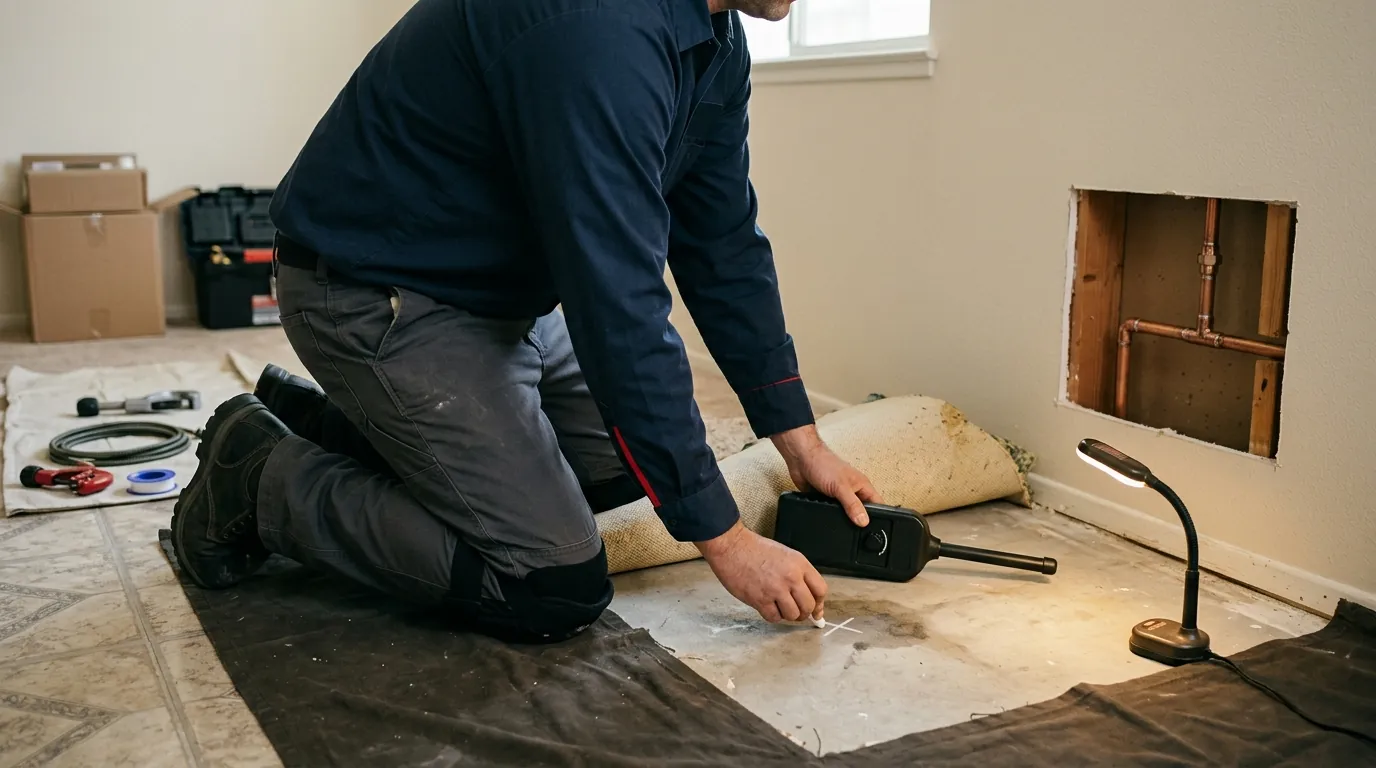
Slab leak repair is not a single procedure — it’s a sequence of decisions that starts with finding the exact leak point and ends with a tested, code-compliant repair. The detection phase uses electronic amplification equipment and thermal imaging to pinpoint the leak without opening the floor blindly. A pressure test on the isolated line confirms the location before any concrete is touched.
Once located, the repair method depends on pipe material, leak position, line age, and how many leaks are present. Three options typically exist:
- Spot repair (direct access): A targeted saw-cut opens the slab above the leak. The damaged section of copper or galvanized pipe is replaced and the concrete is patched. Best when the pipe is otherwise sound and the leak is isolated.
- Pipe rerouting (slab leak reroute): The failed line is abandoned in place and a new line is run overhead through walls or the attic. This avoids further concrete work and is often the right call on older galvanized systems where one leak signals general corrosion throughout.
- Epoxy pipe lining: For certain supply lines, an epoxy liner is pulled through the existing pipe, sealing pinhole corrosion from the inside. Appropriate only when the pipe diameter and condition meet specific criteria.
Timeline from first call to restored water service is typically one to two days for a spot repair, two to three days for a full reroute depending on the layout of the home.
Our process
-
Electronic leak detection and pressure isolation. We shut off the main, isolate hot and cold lines separately, and use acoustic listening equipment and thermal imaging to map the leak under the slab. We confirm with a pressure drop test before marking the floor — no guessing, no exploratory jackhammering.
-
Repair method assessment. We walk you through the detection findings, show you the thermal images, and explain the trade-offs between spot repair, reroute, and lining. The pipe material (copper, galvanized, CPVC), the age of the system, and the number of suspect sections all factor into the recommendation. You approve the scope before we touch the slab.
-
Controlled access or reroute execution. For spot repairs, we use a rotary hammer and cold chisel to open only what’s necessary — typically a 12- to 18-inch window. For reroutes, we plan the new line path to minimize drywall penetrations and restore a clean finish. All new pipe is pressure-tested before the concrete is poured or the walls are closed.
-
Concrete patch and surface restoration. Saw-cut slabs are filled with concrete matched to the existing thickness and allowed to cure. Flooring removal and replacement is coordinated with the homeowner — we document the existing tile or flooring type before any access is made, which matters for insurance documentation.
-
Final pressure test and documentation. We pressure-test the repaired or rerouted line, verify no secondary leaks exist on adjacent runs, and provide written documentation of the repair method, pipe material replaced, and test results. That paperwork is what your insurer needs to process a foundation water leak repair claim.
What separates a good slab leak response from a bad one
The most common mistake is skipping thorough detection and going straight to demolition. Without acoustic or thermal confirmation, a plumber can open the wrong section of slab, miss a secondary pinhole two feet away, or cut through a post-tension cable — a serious structural hazard present in many Bakersfield homes built after the 1980s. Identifying post-tension slab construction before any cutting is non-negotiable.
A second failure point is recommending spot repair on a galvanized system that has widespread corrosion. Fixing one pinhole on a 40-year-old galvanized line typically means another leak within 12 to 18 months. A complete under slab plumbing repair assessment looks at the whole system, not just the loudest leak.
For insurance purposes, adjusters want to see the detection method documented (acoustic, thermal, or both), the pipe material and failure mode noted, and a clear before/after pressure test record. Photos of the hot spot on the floor, the saw-cut access, and the failed pipe section support a claim and prevent disputes over pre-existing conditions.
Seasonal and regional considerations
Bakersfield’s soil expands and contracts significantly through the year — wet winters followed by a long, dry stretch that can push soil moisture content from saturated to bone-dry by August. That movement stresses under-slab pipes at fittings and elbows, which is why slab leaks here tend to cluster in late spring and early fall when the soil transitions. Homes in the southwest and northwest parts of the city with older copper supply lines are particularly susceptible. Hard water throughout Kern County also accelerates pitting corrosion on the interior of copper pipe, making pinhole leaks a recurring issue even on lines that were replaced within the last 15 years.
If water has already spread beyond the pipe into flooring or walls, contact your homeowner’s insurer promptly — they can direct you to a qualified restoration professional for the drying and rebuild scope.
Service area
All Pro Plumbing Heating and Air handles slab leak detection and repair throughout Bakersfield and the surrounding communities, including Oildale, Rosedale, Shafter, Wasco, Delano, Tehachapi, and Ridgecrest. Dedicated service-area pages cover each city in detail.
If your floors feel warm where they shouldn’t, your water meter is spinning with every faucet closed, or you’ve already had one slab leak repaired and suspect another, call (661) 863-9242 any time — day or night. We’ll locate the leak precisely and give you a clear repair plan before a single saw cut is made.
Frequently Asked Questions
How do you find a slab leak without tearing up the whole floor?
What is a slab leak reroute, and when does it make more sense than a spot repair?
My floor has a warm or hot spot — does that always mean a slab leak?
Does homeowner's insurance typically cover slab leak repair in California?
How do I know if my Bakersfield home has a post-tension slab, and why does it matter for slab leak repair?
Looking for the best slab leak repair company in Bakersfield?
All Pro Plumbing Heating and Air provides slab leak repair in Bakersfield, CA and the surrounding area. We answer calls 24/7 — call (661) 863-9242 for immediate help.
Need Slab Leak Repair now?
We respond 24/7 across Bakersfield and surrounding CA cities.
Related Coverage
- Our Plumbing, Heating and Air Services
- Contact All Pro Plumbing Heating and Air
- Slab Leak Repair in Bakersfield
- Slab Leak Repair in Delano
- Slab Leak Repair in Oildale
- Slab Leak Repair in Rosedale
- Slab Leak Repair in Shafter
- Slab Leak Repair in Taft
- Slab Leak Repair in Tehachapi
- 7 Warning Signs of a Slab Leak (and What To Do About Them)